

If you are starting a business, or already have one but still do not have your own website and are wondering whether it is worth the investment, this article explains why your website and your business go hand in hand.
The connection between your website and your business
In recent years, the internet has flooded users with enormous amounts of information — some accurate, some misleading. Even so, it plays a major role in modern life, and it is now difficult to imagine looking for almost anything without first searching online. That already gives a strong answer to the question: should I have my own website?
There are, of course, exceptions where you do not need to spend unnecessary money to achieve your goal. In most cases, however, a business without a website is at a serious disadvantage. People are used to searching online for almost everything. Nearly everyone has a smartphone and can reach the product or service they need in just a few taps. Now imagine whether your business can compete with another one that appears among the top results in the google search engine. Even if you offer the best price or have the best location in town, potential customers may still choose a competitor with a visible online presence. Being easy to find online gives people reassurance and confidence before they decide to buy.
A real-world example
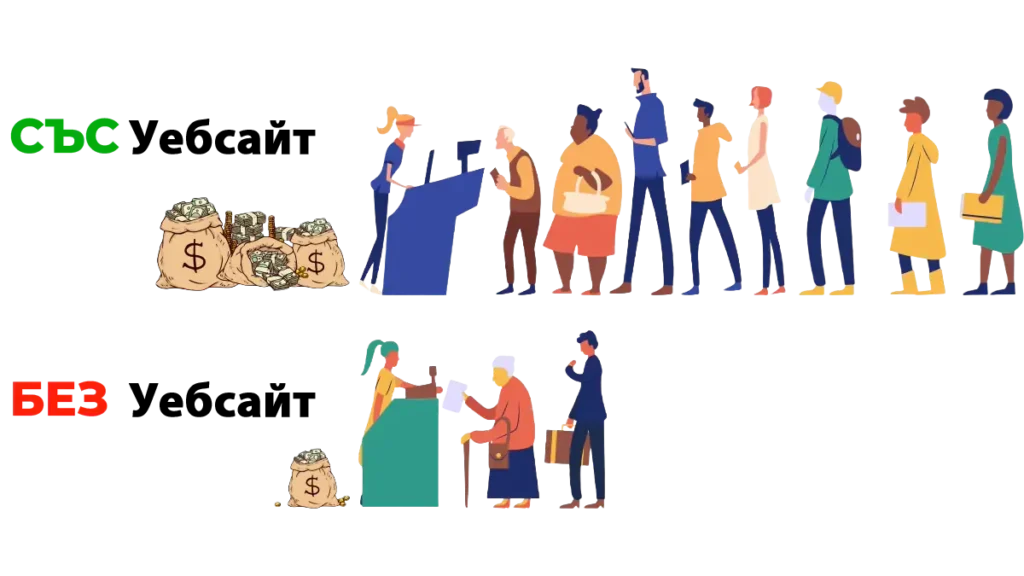
Ivan owns a small fruit and vegetable shop in his neighbourhood and earns a modest monthly profit. He has no website and relies on the reputation he has built over the years. Most of his customers are local residents and older people who do not use the internet much. He does not plan to invest in advertising or a website because the shop is currently profitable enough to cover its costs.
Georgi, who lives in the area, notices that Ivan’s shop has a steady flow of customers and strong growth potential. He decides to open a neighbouring shop with the same products and similar prices, but with one important difference — he invests a small amount in a website.
What happens next? At first, Ivan’s regular customers may not trust Georgi’s new shop. But after a few months, because the products and prices are similar, customer traffic begins to split between the two businesses. Ivan starts to worry as his turnover falls, while Georgi attracts not only some of Ivan’s customers but also new people who discovered his shop online. Over time, Georgi’s shop appears busier and more established, which strengthens customer confidence even further. With a relatively small investment in a website, Georgi has managed to attract new customers and take market share from Ivan. This example shows how an online presence can strengthen a business and improve its competitive position.
Conclusion
Today, an online presence is not simply an option but a necessity. A website makes your business visible and accessible to a wider audience while also creating opportunities for growth, more customers, and stronger competition in today’s dynamic market. The example of Ivan and Georgi clearly shows that your website and your business are closely connected, and even a modest investment in online presence can lead to significant results over time. A website is not only a digital business card, but also a powerful tool for strengthening your position in the market.